Understanding your body fat percentage is essential for evaluating your overall health. It can guide your fitness goals and help track your progress. There are several methods available, each with its own advantages and considerations. Whether you're looking for a simple at-home approach or a more advanced technique, choosing the right method can make all the difference. Let's explore the various options to find the best fit for you.
Key Takeaways
- Use skinfold calipers to measure specific body sites for an effective and traditional method of estimating body fat percentage.
- Consider bioelectrical impedance analysis (BIA) for a quick estimation, keeping hydration levels consistent for improved accuracy.
- Opt for dual-energy X-ray absorptiometry (DEXA) for precise body composition analysis, although it involves minimal radiation exposure.
- Explore hydrostatic weighing or Bod Pod methods for accurate body density calculations, though accessibility may be limited.
- Utilize online body fat calculators for estimates based on basic metrics, but recognize their limitations in precision compared to other methods.
Understanding Body Fat Percentage: Why It Matters
Understanding body fat percentage is essential because it provides insights into your overall health and fitness. Knowing where you stand on this scale can help you identify potential health implications, such as increased risk for heart disease or diabetes.
It's not just about the number on the scale; it's about understanding your body composition and how it relates to your fitness goals. Whether you aim to lose fat, build muscle, or maintain a healthy weight, tracking your body fat percentage can guide your journey.
You'll have the freedom to make informed decisions about your diet and exercise routine, ensuring they align with your personal objectives. Embrace this knowledge to empower yourself and enhance your well-being.
Skinfold Calipers: A Traditional Method
Using skinfold calipers is a popular and effective method for measuring body fat percentage.
You'll want to focus on specific measurement locations and apply proper technique to guarantee accuracy.
In this section, we'll cover the best practices to help you achieve reliable results.
Caliper Measurement Locations
When measuring body fat percentage with skinfold calipers, knowing the right measurement locations is vital for accuracy.
You'll want to focus on specific caliper measurement sites to guarantee reliable results. Common skinfold locations include the triceps, abdomen, suprailiac, and thigh. For men, measuring the chest can also be beneficial. Women typically benefit from including the thigh and triceps in their measurements.
Positioning the calipers correctly and pinching the skinfold firmly yet gently is essential. Remember, the goal is to capture the subcutaneous fat layer without including too much muscle or fascia.
Technique and Accuracy Tips
Achieving accurate body fat measurements with skinfold calipers hinges on technique and attention to detail.
To guarantee measurement consistency, always use the same caliper and practice the same technique each time. Pinch the skin firmly but gently, and make certain you're measuring the same anatomical points as before.
It's essential to maintain technique reliability; consider having a partner assist you for a second opinion or to check your technique. Always take multiple measurements at each site and use the average for more accurate results.
Keep your calipers calibrated, and familiarize yourself with the tool to enhance your confidence.
Bioelectrical Impedance Analysis (BIA)
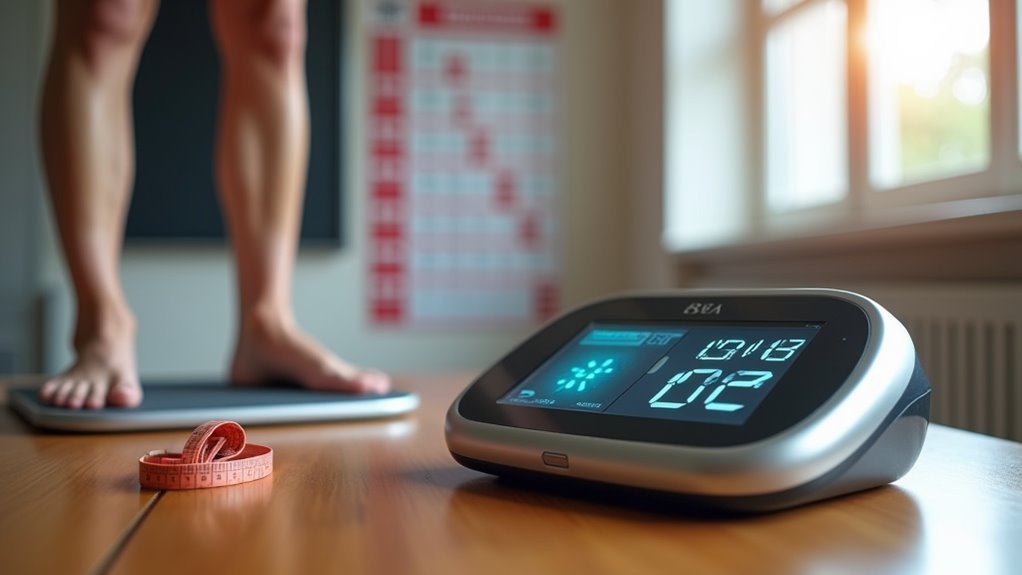
Bioelectrical Impedance Analysis (BIA) offers a convenient way to estimate body fat percentage by measuring how electrical currents travel through your body.
This method relies on the principle that lean tissue conducts electricity better than fat tissue. While BIA devices can be easily used at home, their accuracy can vary.
Here are a few factors to take into account for better results:
- Hydration levels: Make sure you're adequately hydrated, as dehydration can skew results.
- Time of day: Consistency in measurement time can enhance device accuracy.
- Body temperature: Avoid measuring right after exercising, as changes in body temperature may impact readings.
Dual-Energy X-ray Absorptiometry (DEXA)
Dual-Energy X-ray Absorptiometry (DEXA) is a cutting-edge method that accurately measures body fat percentage by using low-dose X-rays.
This technology not only provides precise results but also differentiates between lean mass and fat mass, giving you a thorough view of your body composition.
Understanding how DEXA works and its benefits can help you make informed decisions about your health and fitness goals.
How DEXA Works
A DEXA scan, or Dual-Energy X-ray Absorptiometry, offers one of the most precise methods for measuring body fat percentage.
During DEXA scanning, two low-dose X-ray beams differentiate between lean mass and fat tissue, providing accurate insights into your body composition. This technique is widely used for various medical purposes, including:
- Evaluating fat distribution for athlete assessment
- Monitoring osteoporosis and bone density
- Delivering precision measurements for health diagnostics
While there's minimal radiation exposure, the benefits far outweigh the risks, making it a trusted choice for those seeking an accurate understanding of their body composition.
Ultimately, DEXA empowers you with essential information, enabling you to make informed decisions about your health and fitness journey.
Benefits of DEXA
One of the key benefits of DEXA is its unparalleled accuracy in measuring body fat percentage and composition. This method provides detailed insights into fat distribution, allowing you to understand your body better.
With DEXA, you can track changes over time, which is essential for achieving your fitness goals. The DEXA advantages include its ability to differentiate between lean mass and fat mass, giving you a thorough overview of your health.
However, be aware of DEXA limitations; it requires specialized equipment and isn't always accessible. Despite these drawbacks, the precision and clarity it offers can empower you to make informed decisions about your health and fitness journey.
Embrace the knowledge DEXA provides to enhance your freedom in achieving ideal wellness.
Hydrostatic Weighing: The Underwater Technique
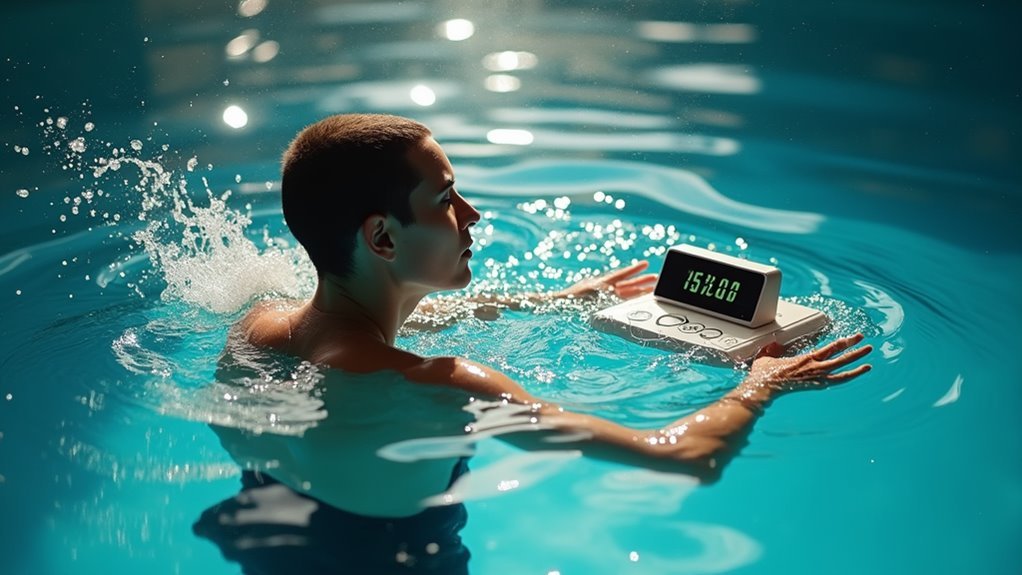
Hydrostatic weighing, often regarded as one of the most accurate methods for determining body fat percentage, immerses you in water to measure your body's density.
By evaluating the underwater pressure and buoyancy effects, this technique provides insights into your body composition that other methods may miss.
Here's what you can expect:
- You'll be fully submerged in water, which can feel unusual at first.
- Your weight is measured both in and out of the water, allowing for precise calculations.
- The process typically takes about 30 minutes, offering a quick yet thorough evaluation.
Embracing this method can empower you to understand your body better, enhancing your journey toward health and freedom.
Hydrostatic weighing could be the key to revealing your true potential.
Air Displacement Plethysmography (Bod Pod)
While you may be familiar with water-based methods for evaluating body fat, Air Displacement Plethysmography, commonly known as the Bod Pod, offers a unique alternative that doesn't require immersion.
This method measures body composition by evaluating how much air your body displaces in a sealed chamber. One of the Bod Pod advantages is its speed; you can get results in about 15 minutes. Additionally, it's comfortable and suitable for various populations.
However, there are Bod Pod limitations to take into account. The cost can be high, and it's less accessible than other methods. Also, individuals with certain clothing or body types may not achieve the most accurate results.
Circumference Measurements: A Simple Approach
When you're looking for a straightforward and cost-effective way to estimate body fat percentage, circumference measurements can be an excellent option. This method involves measuring specific areas of your body, primarily the waist and hips, to gauge fat distribution.
To get started, follow these key measurements:
- Waist Circumference: Measure around the narrowest part of your waist, usually just above your belly button.
- Hip Measurement: Measure around the widest part of your hips, keeping the tape snug but not tight.
- Neck Measurement: For a more thorough assessment, measure around the base of your neck.
These measurements can give you a clearer picture of your body composition and help you make informed decisions about your health journey.
Body Fat Calculators: Online and App Options
If you want a quick and convenient way to estimate your body fat percentage, body fat calculators available online or as mobile apps can be a great resource.
These online tools typically require basic information like your age, gender, weight, and measurements. Some calculators even allow you to input additional metrics for a more tailored result.
When exploring app features, look for those that offer tracking capabilities, progress charts, and personalized insights to keep you motivated.
While these calculators provide a useful estimate, remember they may not be as precise as other methods.
Still, they're a fantastic starting point for anyone looking to gain insight into their body composition and health journey.
Choosing the Right Method for You
Choosing the right method to measure your body fat percentage can feel overwhelming, especially with the variety of options available.
To find the best fit, consider your personal preferences and lifestyle factors.
Here are a few key points to help you decide:
- Accuracy vs. Convenience: Some methods offer precise measurements but require more time and resources.
- Cost Considerations: Budget constraints can influence whether you choose a high-tech device or a simple caliper.
- Accessibility: Think about whether you have access to facilities or professionals who can assist with certain methods.
Frequently Asked Questions
How Often Should I Measure My Body Fat Percentage?
You should aim for monthly tracking of your body fat percentage. This measurement frequency allows you to observe trends, adjust your fitness goals, and celebrate progress without becoming overly fixated on daily fluctuations.
Can Body Fat Percentage Change Without Weight Loss?
Absolutely, body fat percentage can change dramatically without weight loss. As you gain muscle, your body composition shifts, potentially lowering your fat percentage even while the scale remains unchanged. Embrace this transformation for greater freedom!
Is Body Fat Percentage the Same for Men and Women?
Body fat percentage isn't the same for men and women due to gender differences in body composition. Measurement techniques often reflect these variations, highlighting the importance of tailored approaches for accurate assessments based on individual physiology.
What Factors Can Affect Body Fat Measurement Accuracy?
When it comes to body fat measurements, you're walking a tightrope. Various factors, like measurement techniques and hydration levels, can skew results. Staying well-hydrated and consistent with methods helps you achieve more reliable outcomes.
Should I Consult a Professional for Body Fat Assessment?
Yes, you should consider consulting a professional for body composition analysis. Their expertise offers accurate insights and tailored recommendations, ensuring you understand your body fat percentage better and can make informed decisions about your health.
Conclusion
Determining your body fat percentage is essential for understanding your overall health. Did you know that body fat levels can greatly affect your risk of chronic diseases? For instance, having a body fat percentage over 25% for men and 32% for women increases health risks dramatically. By choosing the right method for measuring your body fat, you can gain valuable insights into your body composition and make informed decisions about your fitness journey. Don't underestimate the power of knowledge!

