Like a well-tuned engine needs oil, your body requires water to perform at its best. Hydration is vital for both endurance and recovery, impacting everything from temperature regulation to nutrient transport. When you sweat, you're not just losing water; you're risking your performance. Understanding how to stay hydrated effectively can make a significant difference in your athletic journey. So, what are the best strategies to guarantee you're meeting your hydration needs?
Key Takeaways
- Adequate water intake enhances endurance, strength, and recovery, crucial for optimal athletic performance.
- Dehydration leads to muscle cramps, fatigue, and reduced endurance, negatively affecting physical output.
- Pre-hydration and regular fluid consumption during exercise are essential to maintain performance levels.
- Post-workout hydration replenishes lost fluids, supporting recovery and overall muscle function.
- Incorporating hydrating foods and electrolyte-rich beverages complements water intake for improved performance and wellness.
The Role of Water in Athletic Performance
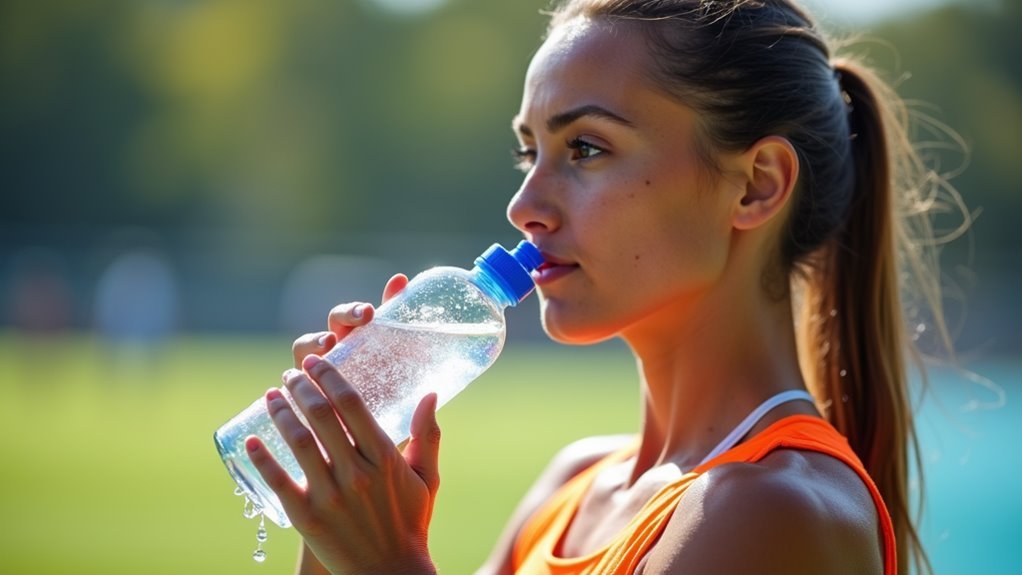
When you're pushing your limits during training or competition, staying hydrated is essential for peak performance. Hydration science shows that maintaining fluid balance directly impacts your endurance, strength, and recovery.
When you're well-hydrated, your body efficiently regulates temperature and transports nutrients, allowing you to perform at your best. To achieve ideal fluid balance, drink water consistently throughout the day, focusing on your training schedule.
Consider your sweat rate and the intensity of your workouts to determine how much you need. Simple strategies like carrying a water bottle or setting reminders can help keep hydration a priority.
Understanding Dehydration and Its Effects
Dehydration occurs when your body loses more fluids than it takes in, which can seriously impact your performance.
You mightn't notice the early signs, like thirst or fatigue, but ignoring them can lead to muscle cramps, reduced endurance, and even heat-related illnesses.
Staying aware of these symptoms is essential for maintaining peak performance and overall health.
Definition of Dehydration
A clear understanding of hydration is essential for athletes aiming to optimize their performance. Dehydration occurs when your body loses more fluids than it takes in, impacting your physical capabilities.
Here are three common dehydration causes to keep in mind:
- Insufficient fluid intake during intense workouts.
- Loss of fluids through sweat in hot conditions.
- Inadequate recovery hydration post-exercise.
Recognizing these causes is key for dehydration prevention. Make it a habit to drink water regularly, even when you don't feel thirsty.
Monitor your body's needs, especially during rigorous training sessions. By prioritizing hydration, you're not just fueling your performance; you're also setting yourself up for effective recovery, ensuring you stay free and ready to tackle your next challenge.
Symptoms and Consequences
Understanding the symptoms of dehydration is essential for maintaining peak athletic performance. You might think you're fine, but common signs like fatigue, headaches, and dizziness can sneak up on you.
Don't fall for hydration myths; just because you don't feel thirsty doesn't mean you're adequately hydrated. Utilize hydration technologies, like smart water bottles or apps, to track your intake and remind you to drink regularly.
Severe dehydration can lead to muscle cramps, decreased endurance, and impaired recovery, which can derail your training goals. Stay proactive by recognizing these symptoms early and adjusting your hydration strategies accordingly.
Hydration and Endurance: The Connection
While you might focus on training regimens and nutrition, hydration plays an essential role in enhancing your endurance.
Proper hydration strategies can greatly affect your performance during endurance training. Here are three practical tips to guarantee you're staying hydrated:
- Pre-hydrate: Drink water before your workouts to optimize your starting levels.
- During exercise: Consume fluids regularly, especially during long sessions. Aim for 7-10 ounces every 10-20 minutes.
- Post-workout: Replenish fluids lost during your workout by drinking water or electrolyte-rich beverages.
Water's Impact on Strength and Power Output
Staying hydrated is essential for ideal muscle function, as water plays a key role in nutrient transport and energy production.
When you're dehydrated, your strength and power output can take a hit, making it harder to perform at your best.
To maintain peak performance, make sure you're drinking enough water before, during, and after your workouts.
Hydration and Muscle Function
Hydration plays an essential role in optimizing muscle function, as it directly influences strength and power output during physical activities. When you're well-hydrated, your muscles can perform at their best.
Consider these hydration strategies to maintain electrolyte balance:
- Drink regularly: Aim for consistent water intake throughout the day, not just during workouts.
- Incorporate electrolytes: Include electrolyte-rich foods or drinks, especially during intense training sessions.
- Monitor your urine: A pale yellow color indicates proper hydration; darker urine signals a need for more fluids.
Dehydration Effects on Performance
Even a small decrease in water intake can greatly impact your physical performance, particularly strength and power output.
Dehydration myths often downplay this effect, but research shows even a 2% loss in body weight can reduce strength and impair your ability to generate power.
To stay at your peak, follow hydration tips like sipping water regularly throughout the day and monitoring your urine color—aim for pale yellow.
Don't wait until you're thirsty; by then, you're already dehydrated.
Prioritize hydration before, during, and after workouts to maintain your performance levels.
Remember, staying hydrated isn't just about feeling good; it's about freedom in your movements and achieving your goals.
Take control of your hydration for best results!
Optimal Hydration Strategies for Athletes
While you might think that just drinking water is enough, athletes need a strategic approach to hydration for peak performance.
To optimize your hydration techniques and maintain electrolyte balance, consider these three strategies:
- Pre-hydrate: Drink 16-20 ounces of water or sports drink 2-3 hours before your workout.
- During exercise: Aim for 7-10 ounces of fluid every 10-20 minutes. If your session lasts over an hour, incorporate electrolyte-rich drinks.
- Post-exercise: Rehydrate with 16-24 ounces of fluid for every pound lost during your workout, focusing on both water and electrolytes.
Signs of Dehydration to Watch Out For
Recognizing the signs of dehydration is essential for maintaining your performance and health during intense training or competition.
Pay attention to your thirst signals; if you're feeling thirsty, your body's already calling for hydration.
Look for dry mouth, dark urine, or a decrease in sweat production—these are clear indicators that you need to rehydrate.
Chronic fatigue can also be a symptom; if you're feeling unusually tired or unable to focus, it might be linked to inadequate fluid intake.
Remember, staying ahead of dehydration means listening to your body and acting before you hit critical levels.
Keep a water bottle handy and make hydration a priority to guarantee you perform at your best every time.
Timing Your Water Intake for Maximum Benefit
To maximize your physical performance, timing your water intake is essential. Proper hydration timing can greatly enhance your performance and recovery.
Here are three key moments to focus on:
- Before Exercise: Drink 16-20 ounces of water at least two hours before your workout to guarantee ideal hydration levels.
- During Exercise: Aim for 7-10 ounces of water every 10-20 minutes while you're active, especially during intense sessions.
- After Exercise: Replenish lost fluids by consuming 16-24 ounces for every pound of body weight lost during your workout.
Hydration Beyond Water: Other Sources of Fluids
When you think about hydration, water often comes to mind first, but other fluids can greatly contribute to your overall fluid intake. Incorporating a variety of beverages can enhance your hydration strategy.
Sports drinks, coconut water, and herbal teas not only quench your thirst but also provide essential electrolytes. Don't overlook fluid-rich foods like fruits and vegetables—watermelon, oranges, and cucumbers can considerably boost your hydration levels.
Aim for a balanced approach that embraces beverage variety to keep things interesting. As an athlete, you want to maintain peak performance and recovery, so explore these alternative sources of hydration.
Staying hydrated isn't just about drinking water; it's about nourishing your body with every sip and bite.
Frequently Asked Questions
Can Drinking Too Much Water Be Harmful During Exercise?
Yes, drinking too much water can be harmful during exercise. It may lead to water intoxication, which poses serious health risks. Balance your hydration to optimize performance and reduce exercise risks. Listen to your body's needs.
How Does Climate Affect Water Intake Needs for Athletes?
Climate greatly influences your water intake needs. In high humidity, sweat doesn't evaporate efficiently, increasing dehydration risk. Temperature variations also raise fluid loss; adjust your hydration strategy accordingly to maintain performance and prevent heat-related issues.
Are There Specific Hydration Needs for Different Sports?
Isn't it fascinating how each sport demands unique hydration strategies? You've got to contemplate sport-specific needs, ensuring you tailor your fluid intake to optimize performance and recovery. Stay informed, and drink wisely!
Does Caffeine Consumption Impact Hydration Levels?
Caffeine effects can be misleading; it's not a significant dehydrator. While hydration myths persist, moderate caffeine consumption can actually enhance performance without harming your fluid balance. Just stay mindful of your overall hydration needs!
What Role Do Electrolytes Play in Hydration?
Think of electrolytes as your hydration superheroes, guarding electrolyte balance. They're vital in hydration strategies, helping your body absorb water effectively. Without them, you'll struggle to maintain energy and performance—so don't overlook their power!
Conclusion
In the world of athletics, water is both your silent partner and your strongest ally. While you might push your limits on the track or field, neglecting hydration can quickly turn performance into a struggle. Imagine this: a well-hydrated athlete thrives, while dehydration leads to fatigue and cramping. To maximize your potential, embrace hydration as an essential part of your training regimen. Remember, every sip counts—fuel your body and watch your performance soar to new heights.